- One DD per web application
- A DD can declare many servlets
- A
ties the element to the element - A
is the Java class - A
is the name the cient uses for the request
Tuesday, December 14, 2010
Deployment Descriptor (DD) in web.xml Highlights

Sunday, October 24, 2010
Apache ANT

Apache Ant is a software tool used for automating software build process. Ant is implemented using Java language and requires Java platform for it to run. Ant is best suited for building Java projects.
Ant uses XML to describe the build process and its dependencies.
What is Inversion of Control (loC)
The Inversion of Control (and also Dependency Injection) patterns concerned with removing dependencies from your code.
public class TextEditor
{
private SpellChecker checker;
public TextEditor()
{
checker = new SpellChecker();
}
}
In the above code sample we have created a dependency between the TextEditor and the SpellChecker. in an ioC scenario we would instead do something like this.
public class TextEditor
{
private ISpellChecker checker;
public TextEditor(ISpellChecker checker)
{
this.checker=checker;
}
}
Now, the client creating the TextEditor class has the total control over which SpellChecker implementation to use. We're injecting the TextEditor with the dependency.
Wednesday, September 29, 2010
How to insert .csv data into mysql
Below coding you can paste in mysql query browser by specifying file location in infile and by specifying other attributes as below
LOAD DATA LOCAL INFILE 'H:\\Nipuna Docs\\test data employee.csv'
INTO TABLE erpsystem.employee FIELDS TERMINATED BY ','
ENCLOSED BY '"' LINES TERMINATED BY '\r\n' (empid,fname,mname,lname);
Wednesday, May 5, 2010
Beauty of Sri Lanka


The island of Sri Lanka lies in the Indian Ocean, to the southwest of the Bay of Bengal. It is separated from the Indian subcontinent by the Gulf of Mannar and the Palk Strait. According toHindu mythology, a land bridge to the Indian mainland, known as Rama's Bridge, was constructed during the time of Rama by the vanara architect Nala. Often referred to as Adam's Bridge, it now amounts to only a chain of limestone shoals remaining above sea level.[20]
According to colonial British reports, this is a natural causeway which was formerly complete, but was breached by a violent storm in 1480.[21] The island consists mostly of flat-to-rolling coastal plains, with mountains rising only in the south-central part. Amongst these is the highest pointPidurutalagala, reaching 2,524 metres (8,281 ft) above sea level.
Source : wikipeida
Guide to Cooperate Blogging

In order to maintain a competitive edge, corporations are increasingly looking for opportunities to make them stand out. Although traditional media serves as a solid medium that disperses company messaging to the world, the trends of information consumption are evolving. After some initial hesitancy, corporations are slowly starting to realize that it is important to jump on the virtual bandwagon of blogging. This medium represents the missing ingredient that traditional media lacks: the ability to directly connect a company to its customers.
As of February 2008, 54 companies listed on the Fortune 500 have corporate blogs (source). I had the great honor of interviewing the social media gurus behind three of the top companies with blogs: Michael Brito, Social Media Strategist at Intel, LaSandra Brill, Manager, Web & Social Media Marketing at Cisco, and Tac Anderson, Web 2.0 Strategic Lead at Hewlett Packard (HP).
Below is the information Intel, Cicso and HP have provided me regarding how their companies utilize blogging to connect with their customers.
Why is Blogging Crucial to Corporations?
What is the first image your mind conjures up when a brand is mentioned? Is it the logo, the jingle on the advertisement or the experience you previously had with the brand? Blogging allows current and potential consumers to associate the brand with a face and a personality. It bridges the distant gap that has existed between the “inaccessible” company and the “average” consumer. Brito said, “It’s a way for us to appear less corporate and put a human face when we interact online. We believe people relate more effectively to other people instead of a logo or corporate brand.”
Additionally, the blog is a representation of the company’s values, beliefs, philosophy and direction. If they are involved in a medium that encourages a two-way conversation, it shows their consumers that they care about their opinions. Brill noted, “Blogging lets us communicate with our customers in a more personal and direct way. But more importantly, blogging gives us a much needed way for customers to communicate with us. Customers are able to interact with comments and potentially provide valuable feedback or insight that can be brought back into the business.”
Although direct interaction with customers is an incredible incentive, there are many other benefits to blogging. It has the power to position employees as thought-leaders in their industry, to assist in reputation management during crises; to build brand awareness and loyalty; and to increase brand visibility, traffic and links.
Steps Fortune 500 companies take to Create a Blog
1. Determine if blogging is a good fit for your company
There are many corporations that are seduced by the concept of blogging. It is important to examine the target audience and if a blog is a good way to reach them. Research the socialsphere to learn what your audience generally does online.
2. Determine if your company is willing to invest in a blog
Although blogs can be built on free platforms, it is important that the company is willing to invest money into customizing the design of the blog, hiring experts for training, allocating manpower hours for blogging, and so on. Jeremy Wright, CEO of b5media, noted, “A bad blog is worse than no blog. A dead blog is worse than no blog. But an engaging blog is one of the best things in the world that you can do for your business.”
3. Create a strategy
After collecting all the essential data and having the approval necessary to proceed, it is important to write a strategy that defines the direction of the blog and its purpose. Brill said, “The strategy answered the basic questions of why we were entering the blogosphere, what our goals were and how we were going to measure the results.”
4. Ensure that everyone is on the same page
It is important for all the key players to be aware that the company is launching a blog that represents a specific component of the company. Providing them with the strategy document or an executive summary will increase their willingness to contribute to the blog. Brito said, “In the corporate environment, it is important to get everyone aligned internally (i.e. legal, privacy &security, marketing, product teams, customer support). They need to be aware of the blog not only because they may want to support it, but also for approvals.”
5. Determine the Involvement of PR
Many blogs have failed because they were used as a forum to share news releases, commercial information, and white papers. However, if the PR department is knowledgeable about blogging best practices, this should not be a problem. There are many different perspectives on this specific topic. When asked if a company’s PR department should manage the blog, Brito said that their involvement in blogging depends on their knowledge of the blogosphere. A PR department that has extensive writing experience that would be helpful in crafting interesting posts.
On the other hand, some companies regard the PR team a corporate policy enforcer and as an “in-case-of-emergency” liaison during challenging situations. Brill shared, “PR department should manage the blog policy and should be involved if a legal issue were to come up.”
However, the PR team should never be kept out of the blogging team altogether. The company needs to decide which role they will play depending on their goals and strategy. Anderson said, “PR should be involved and part of the team but not doing the blogging.”
6. Select Bloggers
Before identifying the bloggers, it is important to decide if this blog will have a single voice or will have multiple authors. Cisco, HP, and Intel have multi-authored blogs. If the company has many products and services in its portfolio, then having many subject matter experts blog is a good idea. Brill said, “We chose a heterogeneous team of experts to make sure we had coverage in all of the areas our customers might be interested in.”
However, it is important to note that mutli-authored blogs aren’t the only direction corporations should take. Companies can select a specific employee as the sole blogger who communicates product-related updates, company news and industry views. Also, this is a good time to determine if the company wants the CEO to blog. Brito encourages top executives of smaller-sized companies to be the voice of the blog. Anderson added, “It depends on the goal of the blog.”
7. Train the Bloggers
It is true that anyone can blog, only a few can blog well. It is important to train the selected authors on blogging best practices, writing tips, and promotion. This is also an excellent time to share the corporate blog policies in place to avoid any problems in the future.
8. Writing Posts
There are some companies that work with their team to create an editorial calendar that makes it easier for bloggers to author a post without having to work on digging up an idea. Additionally, it establishes blogging frequency, which is crucial for reader retention. Other companies like Intel list out all upcoming events, product launches and post ideas. It is important to avoid including press releases and white papers on the blog. Brito says, “We are talking to real people with real personalities, wants, desires and passions; and it’s important that we treat them that way by paying attention to them. We show them the love and in hopes that they will love us back; and tell people about it too.”
9. Realize that the Blog doesn’t need a tone
When you have a variety of bloggers, the uniqueness of each voice will make the blog more interesting. Brito notes, “Everyone is different and one of our goals for the blog is to be real and personal: real people, real personalities and different points of view. Besides who would want to go to a party where everyone is the same (same tone, same conversation?)”
10. Editing
The company needs to determine if they will implement an editing process. Cisco and Intel do not require their bloggers to send their posts for editing before publishing. They are available if a blogger needs it reviewed or has questions. At HP, Anderson helps with editing, optimizing and formatting the posts. Depending on the sensitivity of the subject, try to avoid an editing process that is convoluted and time-consuming.
Possible Editing Processes:
Blogger > Editor > Blogger > Editor > Publish
Blogger > Editor > Publish
Blogger > Publish
11. Establish a Comment Policy
Blogs aren’t supposed to serve as company megaphones that push corporate messages out to the consumers. The purpose of blogs is to serve as a two-way conversation between the company and the customer. It is important to allow the readers to share their opinion on the blog. Circumventing that will lose readers. Additionally, bloggers and employees should be encouraged to post and respond to comments. This will keep the dialogue going.
At the same time, companies may have a strict policy against foul language and spam. The community typically understands when such comments are deleted. Cisco, Intel and HP allow positive and negative comments. In dealing with negative comments, Brill shares, “Most comments are published within a couple hours including negative comments. Negative comments are handled on a case by case basis- sometimes it is best to sit back and let the others in the community chime in and sometimes clarification maybe needed to set the facts straight. In other cases we engage the commenter directly to understand the negativity.”
12. Develop a Promotion Strategy
The blog might have incredible content, but it will not gain traction unless it is promoted. The target audience needs to know that the blog exists for them to visit it. Brito said, “It’s about equipping and training the bloggers to participate in the conversations that are happening of the corporate domain. Are they on Twitter, Friendfeed, MyBlogLog, andFacebook? Are they spending considerable amount of time building community within these channels and responding to relevant comments? And, are these tools talking to each other and pulling in feeds?” During the pre-launch phase, bloggers can begin establishing profiles, developing a presence, and building a network.
13. Establish a Measurement program
In order to show the success of the blog, the blogging team should establish key metrics that are important to the company. This may include views, comments, backlinks, RSS subscriptions, etc. Brito cautions, “Its common knowledge that 1:1 ration of posts to comments is a good benchmark for corporate blogs. While this may seem a bit low, it may be a good start.”
An additional step to consider is creating a monthly report that shows the level of success the blog is experiencing. The numbers can show key insights into what content worked well, the keywords used to find the blog, and the promotional efforts that drew in the most people. These learnings can be turned into monthly recommendations to the extended blogging team.
Source : PROBLOOGER
Time Management Tips

Learn to see the difference between urgent and important
The important tasks are those that lead you to your goals, and give you most of the long term progress and reward. Those tasks are very often not urgent. Many urgent tasks are not really important.Know and respect your priorities
Aim to do the important things first. Remember the 80-20 rule: 80 percent of reward comes from 20 percent of effort. One of the aims of time management tips is to help you refocus your mind to give more attention and time to those most important 20 percent.Plan your actions for achieving your goals
Convert your goals into a system of specific actions to be done. The first significant point of planning is the planning process itself. It is a known fact, and you will see it for yourself, that the planning process stimulates your brain to come up with new efficient solutions. It programs your subconscious mind to search for shortcuts. It makes you much more prepared for each specific action. Besides, planning will help you to identify potential conflicts and crises, minimizing the number of urgent tasks.Planning can also significantly lower the time spent on routine maintenance tasks, leaving you more time on what you like to do or for what you think is important for your long term success.
Also remember that planning and related time management tips work best when you review your plans regularly.
Schedule time for your tasks
Your concentration can be easily lost in the sea of many boring or less important things waiting to be done in your head. Undone things circulating in your mind are also a big drain of your mental energy. Most often, there is no way to get those things out of your mind except of either doing them or scheduling them in a trustable system, convincing your mind that they will be done in due time.Know how you spend your time
Keep a time log during some time interval, like a week, and then analyze it to see where your time goes. For example, what percentage of time you spend on urgent and on important activities, what people you devote most time to. You are likely to be surprised, and you will see much better if you could use more time management tips. This is also an effective way to get a feedback on how well time management tips and techniques are working for you, and where you need some adjustments.Source : Time Managemet Guide
Saturday, May 1, 2010
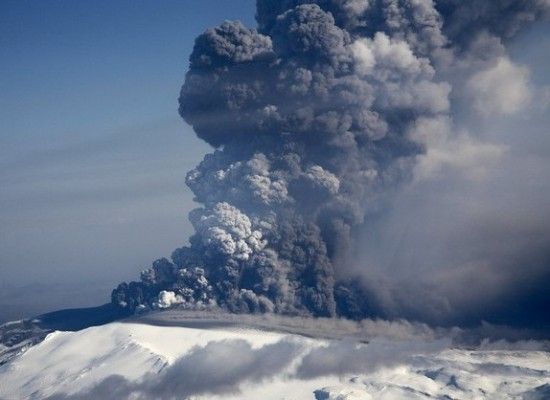
Volcanic ash causes Europe flight disruptions to worsen
From staff and wire reports
Ash from an erupting volcano blanketed the ground in Iceland on Friday and left a widening trail of grounded aircraft across Europe, as thousands of planes stayed on the tarmac to avoid the hazardous cloud.
British aviation authorities extended a ban on flights over England and Wales for six more hours into Saturday morning but say restrictions over Scotland and Northern Ireland are being lifted.
The National Air Traffic Service said in a statement that the British flight ban now stretches to 7 a.m. local time, 2 a.m. ET. The ban affects all of London's five airports, including Heathrow, Europe's busiest.
The company says overseas flights can now depart and arrive at airports in Scotland and Northern Ireland, but that did "not mean that all flights will operate."
Eurocontrol, the European air traffic agency, said the flight disruptions that have upended travel in Europe — half a dozen European nations have closed their airspace —would reverberate throughout the world.
"The skies are totally empty over northern Europe," said Brian Flynn, deputy head of Eurocontrol, adding "there will be some significant disruption of European air traffic tomorrow."
The agency said about 16,000 of Europe?s usual 28,000 daily flights were canceled Friday — twice as many as were canceled a day earlier. Only about 120 trans-Atlantic flights reached European airports compared to 300 on a normal day, and about 60 flights between Asia and Europe were canceled.
World airlines say they are losing at least $200 million in revenue a day. The Geneva-based International Air Transport Association said airlines will also face additional costs for rerouting aircraft and caring for stranded passengers and planes.
The group representing 230 airline companies said it has set up a crisis center in Montreal to help carriers and air-traffic controllers coordinate efforts. IATA said the losses were an "initial and conservative estimate."
The World Health Organization said Europeans should try to stay indoors if ash from Iceland's volcano starts raining down from the sky.
WHO spokesman David Epstein said the agency doesn't know the exact health risks from the ash cloud.
But he said the microscopic ash is potentially dangerous for people if it starts to "settle" on the Earth because inhaled particles can reach the lungs and cause respiratory problems. There is a heightened danger for those suffering from asthma and respiratory diseases.
Ice chunks the size of houses tumbled down from a volcano beneath the Eyjafjallajokull (ay-yah-FYAH'-plah-yer-kuh-duhl) glacier Thursday, as hot gases melted the ice. The volcano began erupting Wednesday for the second time within a month.
As torrents of water and ice chunks roared down the mountain, about 40 people near the volcano in southern Iceland were evacuated because of flash flooding, a smaller number than emergency officials initially reported. Further floods from melting waters are expected as long as the volcano keeps erupting, said Rognvaldur Olafsson of the Civil Protection Department.
The ash cloud, drifting between 20,000 feet and 36,000 feet high and invisible from the ground, left tens of thousands of travelers stranded around the globe and blocked the main air flight path between the U.S. East Coast and Europe.
Fearing that microscopic particles of highly abrasive ash could endanger passengers by causing aircraft engines to fail, authorities shut down airspace over Britain, Ireland, France, Denmark, Norway, Sweden, Finlandand Belgium. That halted flights at Europe's two busiest airports — Heathrow in London and Charles de Gaulleairport in Paris — as well as dozens of other airports, 25 in France alone.
As the cloud moved east, flights were halted Friday at Frankfurt's airport, Europe's third-busiest terminal, and at 10 other German airports including Duesseldorf, Berlin, Hamburg and Cologne. Poland expanded its no-fly zone to most of the country, excluding the southern cities of Krakow and Rzeszow.
The spreading ash could threaten the arrival in Krakow of many world leaders for Sunday's state funeral of President Lech Kaczynski and his wife, Maria, who were killed along with 94 other dignitaries and people in a plane crash last Saturday as they were approaching the airport in Smolensk, Russia.
Among those who said they would attend the funeral are President Obama, Russian President Dmitry Medvedevand German Chancellor Angela Merkel.
"It is the will of the family that, under no circumstance, the date of the funeral be changed," Presidential Palace spokesman Jacek Sasin said Friday on the family's behalf.
No more than 120 trans-Atlantic flights reached European airports Friday morning, compared with 300 on a normal day, said Eurocontrol's Evans. About 60 flights between Asia and Europe were canceled Friday, stranding several thousand passengers.
Some European countries reported a slight easing of conditions.
The French Civil Aviation said it will allow some planes to land at the three Paris airports during a four-hour window starting at noon Friday.
Sweden and Norway declared skies in the far north to be safe again for travel even as flights in both capitals — Stockholm and Oslo — were still on a lockdown. Civil aviation authorities in Ireland lifted most restrictions the country's airspace, reopening airports in Dublin and Cork.
One Toronto-bound flight departed from Glasgow, Scotland, on Friday morning and three Thomson Airways international flights were cleared to land.
Aviation experts said it was among the worst disruptions Europe has ever seen.
"We don't have many volcanoes in Europe," said David Learmount of Flight International, an editor at the aviation publication. "This one is right out there on the extreme edge of what you would consider Europe — but the wind was blowing in the wrong direction."
U.S. airlines canceled scores of flights to and from Europe from Wednesday night through Friday morning and said it would decide Friday whether they need to cancel more as the cloud of ash hovered over the Atlantic Ocean.
SCIENCE: Eruption could last months
Einar Kjartansson of the Icelandic Meteorological Office said that depending on the weather, the plume could hang around for weeks — though its location will depend on the wind.
The last time the volcano blew the eruption lasted more than a year, from December 1821 until January 1823, said Sally Sennert, a geologist at the Smithsonian Institution.
"This seems similar to what's happening now," she said. The volcano is erupting small, jagged pieces of rocks, minerals and volcanic glass the size of sand and silt into the atmosphere, according to the U.S. Geological Survey.
Once in the air, the wind can blow these tiny ash particles tens to thousands of miles away from the volcano. Life-threatening and costly damages can occur to aircraft that fly through an eruption cloud, reports the Geological Survey.
"Silica in the ash gets into the engine and heats up and melts, which causes the engines to stop," Sennert said.
Based on reported damages from ash encounters, the hazard posed to aircraft can extend more than 3,000 miles from an erupting volcano.
Eight of the 10 busiest trans-Atlantic routes are to London, and the second-most-traveled international route is between London and New York, according to Steve Lott of the International Air Transport Association.
"London is an important transfer hub to every corner of the world," said Lott, who added that it was unclear when the cloud would lift, allowing air travel to resume. "What is (of) particular concern for airlines is the unpredictability of this disruption. As the ash cloud moves, it affects different airports and airspace."
The cloud is traveling east to southeast, Sennert said.
Rebooking, refunds offered
U.S. airlines had canceled more than 100 flights to and from Britain by noon Thursday, according to David Castelveter, spokesman for the Air Transport Association of America, which represents most of the major U.S. carriers.
On average, U.S. airlines operate about 340 flights to and from Europe each day.
American Airlines canceled 34 flights as of Thursday afternoon, most of them in and out of London's Heathrow Airport, but also involving Dublin, Brussels, Paris and Manchester, England, spokesman Tim Smith said.
Delta canceled 65 flights that were headed Thursday night or this morning from such cities as Atlanta and Pittsburgh to several international cities including Paris, Amsterdam, London, Brussels and Mumbai, India, spokesman Anthony Black said. Delta had previously canceled nine flights to and from Britain since Wednesday night.
Carriers were trying to accommodate travelers.
Delta passengers whose flights were canceled can get a full refund. Passengers who were scheduled to take Delta flights to, from or through several affected cities Thursday through Sunday can make a one-time change to their flight schedule without paying a fee, if they do so by the end of April.
American Airlines will also let fliers whose flights haven't been canceled change flights without penalty through the end of the month. They can get a new flight or a full refund if the trip was canceled.
The airline, which has a heavy flight schedule into South America, has dealt with natural calamities before, Smith said. "In the past, (we) had volcanoes we dealt with in Mexico, Ecuador, Chile, Argentina. From time to time, it does happen."
'It's all so frustrating'
Offers of refunds provided little solace to thousands of stranded travelers on both sides of the Atlantic.
Amy Tatman Robins, a native of Columbus, Ohio, who's living in Galway, Ireland, was headed to a funeral in Scotland. But two flights that she booked from Dublin to Glasgow were canceled, and she had been unable to find another way to her destination.
"It's all so frustrating and unbelievable at the same time," she said in an e-mail. "My dear friend is putting his father to rest, ... and I'm so sad I cannot be there for the memorial service. I'm still holding out hope. All because of a cloud of ash in the sky."
Contributing: Charisse Jones in New York; Doyle Rice in McLean, Va.; the Associated Press
From USATODAY updated 4/16/2010 2:20 PM
Monday, March 8, 2010
Sinharaja Rain Forest Sri Lanka



Located in south-west Sri Lanka, Sinharaja is the country's last viable area of primary tropical rainforest. More than 60% of the trees are endemic and many of them are considered rare. There is much endemic wildlife, especially birds, but the reserve is also home to over 50% of Sri Lanka's endemic species of mammals and butterflies, as well as many kinds of insects, reptiles and rare amphibians. The largest mammal in the forest is the rarely spotted leopard, also infrequently glimpsed are the rusty spotted and wild fishing cats. Sambhur, barking deer and wild boar browse on the forest floor. The more common troops of purple-faced langur monkeys will chatter and move through the trees above you, but you're more likely to hear them than actually see them. There are also rats, shrews, giant squirrels, porcupines, civets, mongooses, venomous snakes, 20 species of birds and 45 species of reptiles!. |
Wednesday, February 10, 2010
Aerial Photos of Trade Center 9/11 released

Newly released aerial photographs of the World Trade Center terror attack capture the towers’ collapse, from just after the first fiery plane strike to the dust clouds that spread over Lower Manhattan and New York harbor.
The images were taken from a police helicopter carrying the only photographer allowed in the air space near the towers on Sept. 11, 2001. They were obtained by ABC News after it filed a Freedom of Information Act request last year with the National Institute of Standards and Technology, which investigated the towers’ collapse.
The still images are “a phenomenal body of work” that show a new, wide-angle look at the towers’ collapse and the gray dust clouds that shrouded the city afterward, said Jan Seidler Ramirez, the chief curator of the National September 11 Memorial & Museum, which is compiling a digital archive of attack coverage. The photos are “absolutely core to understanding the visual phenomena of what was happening,” Ms. Ramirez said.
The images of the dust clouds rising as high as some downtown skyscrapers “are some of the most exceptional images in the world, I think, of this event,” she said.
ABC said the photographs were among 2,779 pictures on 9 CDs the Institute of Standards gave the network. Some of the photographs had not been released before, it said.
The network posted 12 photos this week on its Web site, all taken by Greg Semendinger, a former detective with the New York Police Department’s Aviation Unit, who was first in the air in a search for survivors on the rooftop. He said he and his pilot watched the second plane hit the south tower from the helicopter.
“We didn’t find one single person. It was surreal,” he told The Associated Press on Wednesday. “There was no sound. No sound whatsoever but the noise of the radio and the helicopter. I just kept taking pictures.”
Source : http://global.nytimes.com/
Friday, February 5, 2010
Project Management Tips
Getting Started – Initiation
1. Develop a solid business case for your projects. Where appropriate, ensure you obtain senior managers’ agreement before you start the project. Research points out that too many projects are started without a firm reason or rationale. Developing a business case will identify whether it is worth working on.
2. Ensure your project fits with the key organisational or departmental agenda or your personal strategy. If not, why do it? Stick to priority projects.
3. Carry out risk analysis at a high level at the initiation stage. Avoid going into great detail here – more an overview focussing on the key risks.
4. Identify at this early stage key stakeholders. Consider how much you need to consult or involve them at the business case stage. Seek advice if necessary from senior managers
5. Where appropriate, involve finance people in putting the business case together. They can be great allies in helping crunch the numbers which should give credibility to your business case.
Wednesday, February 3, 2010

Sunday, January 31, 2010
Why Software’s fail?

“We waste billions of dollars each year on entirely preventable mistakes”
It is estimated that organizations and governments worldwide will spend about $1 trillion this year on IT projects. Recent data suggests only 35% of them are likely to be completed on time and on budget, with all their originally specified features and functions. About 20% will be abandoned often after multibillion dollar investment and the biggest fall most often. There are many reasons for this,
§ Low quality in development
§ Improper project management
§ Less technical skills
§ Higher Development cost
§ Imperfect and insufficient testing
§ Poor Implementation
§ Poor integration
§ Software errors (Bugs)
§ Breakdowns in Software upgrades
When developing software’s higher standards must be kept with proper project management which will satisfy customer requirements. Low quality in development phase will result in rejecting the software in no time. This would also be result in higher development cost.
Also most effort must be given to testing in development phase of software. Testing must also carefully monitor for errors and bugs. Imperfect and insufficient testing will also affect badly on the development agency.
Poor integration between software modules will result in missing and incorrect data in the software system. Low quality in development, imperfect and insufficient testing can be identified as the main reasons for this. In US in December of 2007 significant software problems were continuing to occur in a new ERP payroll system for a large urban school system. More than one third of employees had received incorrect paychecks at various times since the new system went live the preceding January, resulting in overpayments of $53 million, as well as underpayments. Inadequate testing reportedly contributed to the problems.
Using the industry standards is a must when implementing the software at customer. Poor implementation will result in drawbacks which will affect the company’s reputation and software rejection when noticed by the client.
Large software’s must meet the technical specs with the future technology, software’s must be well fit with the other supporting systems such as database systems, networking topologies etc, operating systems etc. the software must also support the newer versions of these supporting systems. Crashes and breakdowns cannot be expected in well developed systems in software upgrades.
Subscribe to:
Comments (Atom)